


Home » Animal care » Backyard poultry care
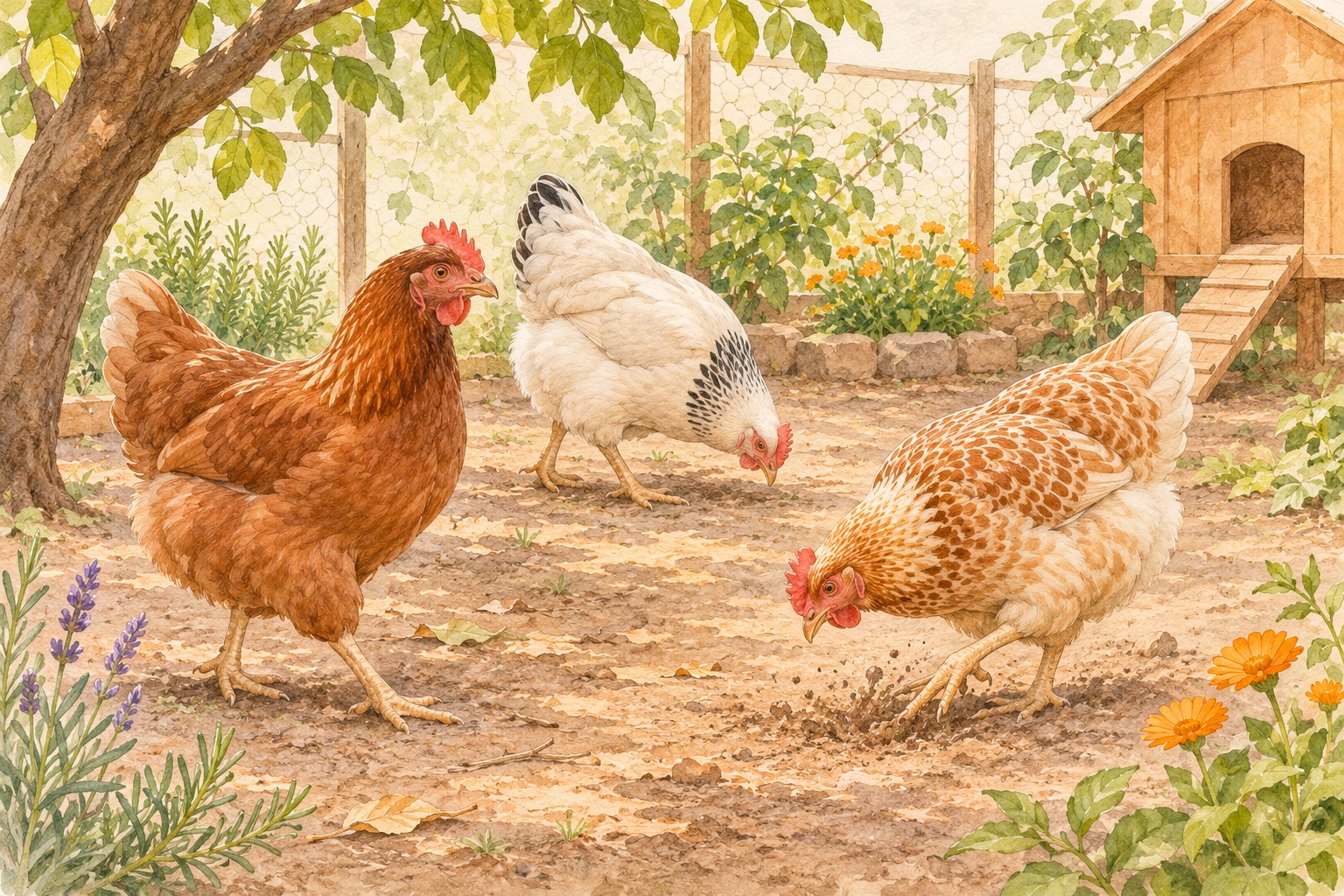
This guide focuses on hens kept in small domestic flocks. They need to explore, scratch, dust bathe in dry soil and rest in a protected place. Ducks, geese and chicks have different needs: the same housing and food cannot simply be applied to all of them. Identify the species, age and reproductive stage before preparing their environment.
Before acquiring birds, check keeping requirements and current health measures with the town council and local agricultural office. Prepare the accommodation and agree a health check and a separation period for new arrivals with your vet before mixing them. Keeping only a few birds does not remove these precautions. Observe every individual daily: egg production alone does not show whether a bird is healthy.
A calm flock with space, appropriate food and opportunities to explore makes behaviour changes easier to notice. Pay particular attention to birds that stay apart.
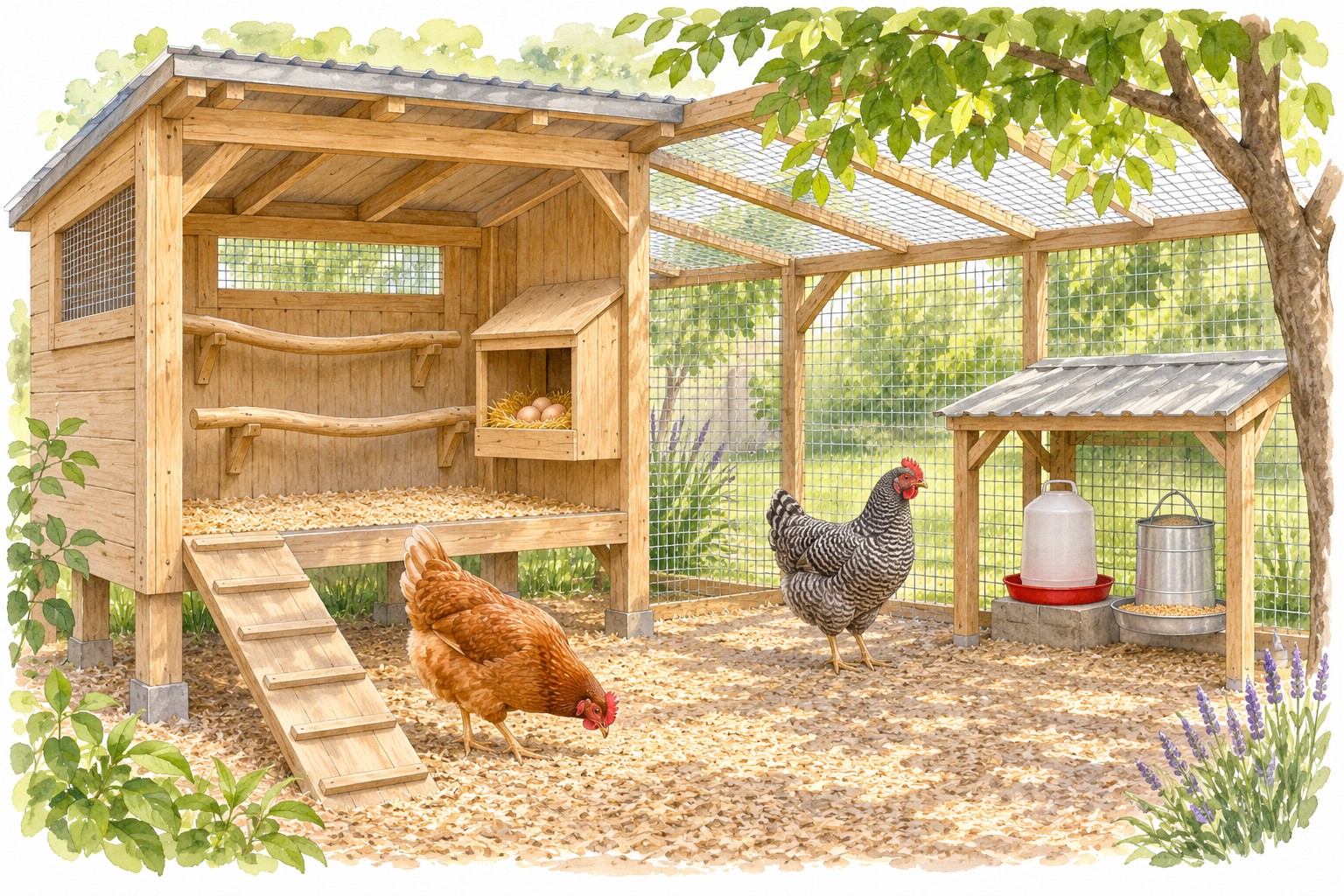
Provide a dry, ventilated, predator-proof coop that closes securely at night. Allow room to walk, spread wings and move away from other birds without being trapped. Keep litter dry and remove wet patches; avoid mouldy bedding. Offer shade and shelter from rain.
Hens need stable perches with rounded edges and clean nests in a quiet area. Adjust perch height to size and mobility, with easy access for heavy birds. Provide dry soil for dust bathing, surfaces to scratch and opportunities to search for small portions of their daily ration. Check mesh, fastenings and potential escape points.
Use a complete feed for the species and life stage. Grain, bread and kitchen scraps cannot replace a balanced ration. Limit extras so they do not displace the main feed, and remove food before it spoils. Store feed in a dry place protected from rodents and damp.
Layer feed contains more calcium than grower feed: it is not automatically suitable for chicks, cockerels or non-laying birds. If ages or nutritional needs differ within the flock, ask for a feeding plan. Do not routinely add calcium or vitamins. Keep clean water available at all times and check that every bird can reach both food and water.
Hens are social, but may not immediately accept every newcomer. Introduce birds gradually after the separation period advised by your vet. Watch for chasing, pecking, wounds and individuals unable to reach food. Provide several food and water stations and assess compatibility before mixing birds of very different sizes.
Wash drinkers and feeders daily, remove spoiled food and replace dirty litter. Reduce contact with wild birds and protect feed and water. Use footwear dedicated to the enclosure and wash your hands afterwards. Clean equipment away from the kitchen; even healthy-looking birds can carry microorganisms that affect people.
Agree health checks, vaccination and parasite control according to the flock’s origin, environment and local health situation. Do not give parasite treatments or antibiotics without veterinary advice. Watch appetite, weight, droppings, walking, feet, eyes, breathing and laying changes. A hunched, inactive hen or one that stays apart needs early assessment.
Seek urgent care for difficulty breathing at rest, bleeding, marked weakness, a prolapse or persistent straining to lay. Do not squeeze the abdomen or try to extract an egg. If several birds become ill or unexpected deaths occur, avoid moving or unnecessarily handling them and immediately contact your vet and the official animal health services for instructions.
Check that shade remains available throughout the day: a shaded area in the morning may be exposed to afternoon sun. Encourage ventilation and provide several sources of fresh, clean water. Avoid enclosed spaces that trap heat and arrange cleaning, handling or transport outside the hottest hours.
Panting and holding the wings away from the body may indicate excessive heat. If these signs persist, or the bird becomes dull, unsteady or unable to stand, seek prompt veterinary attention. Allow calm access to shade and water while obtaining advice; do not force water into the beak or use ice-cold baths. Large birds and those with existing health problems may cope less well.
Ducks and geese need water deep enough to immerse their heads and clean themselves, plus bathing access appropriate to their species and age, with an easy way in and out. Provide a dry resting area as well: persistent mud damages the environment. Geese need opportunities to graze in suitable space. Chicken perches do not replace appropriate waterfowl accommodation.
Chicks require suitable starter feed and a controlled thermal environment with a safe heat source they can move away from. Management depends on age and whether they are with their mother. Obtain a plan before bringing them home; do not place them directly in adult conditions or assume they can share the same ration.
Explore our care by species index. To discuss your birds’ needs at Aracavia in Málaga, call 951 23 93 09. This guide is also available in Spanish.
Information – Appointments – Emergencies


CITA PREVIA